Skip to product information
1 of 8
OSMØ®
ANTI-CRAMP FORMULA

ENDURANCE HYDRATION STICK

4.8 Rating 87 reviews on Trustpilot
Stomach friendly
Easy to mix
Not too sweet
No aftertaste

Built for the long, hard sessions where water alone isn't enough. Each stick: 593 mg sodium, 402 mg potassium, 81 mg magnesium. No sugar. No sucralose. No fillers.

Stops cramping
593 mg of sodium per serving. Designed for heavy sweaters who actually need it.
Olympic designed
Built with Olympic Champion Tom Digby and sports scientists, using real athlete sweat rate analysis.
Informed Sport certified
Tested for banned substances. Trusted by tested athletes.
Select Quantity
10 sticks per box
4.8 ★ from 87 reviews · 60-day money back
View full details

Sound familiar?

White salt rings on your kit

Cramping during long sessions

Headaches after hot training

Hydration tabs that taste sweet but don't actually do anything

You're a heavy sweater. Kaiju is built for you.

Take the 60 second sweat test →

Why it matters

You can lose up to ~1,200 mg of sodium per hour of training. Most tablets don't replenish that. Kaiju does.

593mg

Sodium per serving

≈10×

More than a typical sports drink

0g

Sugar · sucralose · fillers

How we compare

Others
Kaiju
Sodium (Na)
Low dose
≈10× higher
Potassium (K)
Low dose
≈3× higher
Magnesium (Mg)
Missing
Included
Sugar
Dextrose
None
Sweeteners
Sucralose
None
Goal
Flavour
Performance

A team that designs your hydration around your physiology.

Olympic Champion. Olympic medalist sports scientist. Performance nutritionist. They built the sweat test that tells you exactly how much sodium you actually lose per hour.

Tom Digby

Olympic champion

Co-founder of Kaiju. World class rower. Brings firsthand insight into endurance, recovery, and sustained performance.

Hélène Defrance

Sport scientist

Olympic medalist. Bridges research and practice.

Gareth Nicholas

Performance nutritionist

Renowned sports nutritionist. Shapes Kaiju's formulations with evidence based expertise.

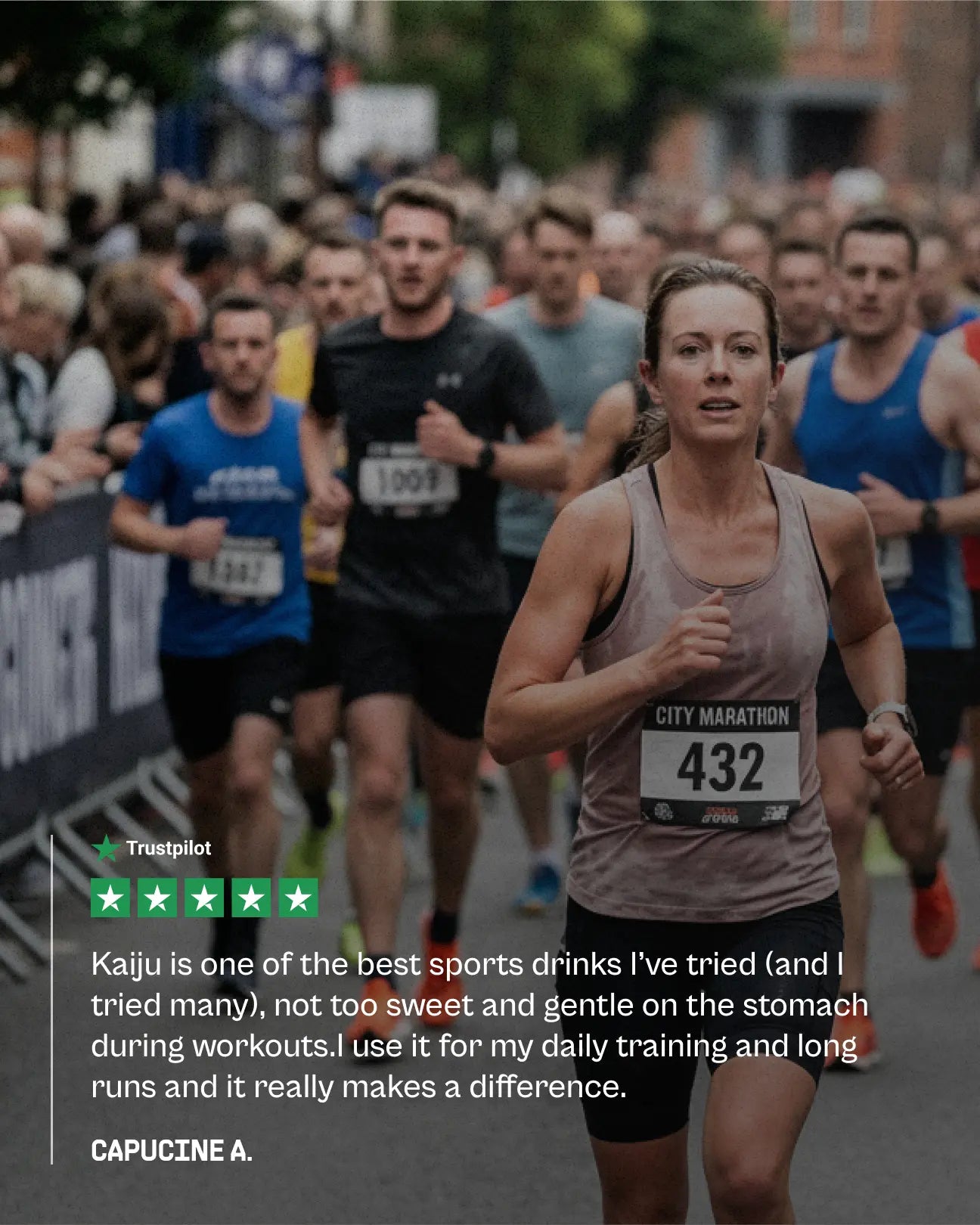
What heavy sweaters say

4.8 ★ from 87 reviews on Trustpilot

How to use

Step 1

Take the sweat test

Find your sodium loss profile in 60 seconds.

Step 2

Mix with 500 ml water

Pour one stick into your bottle.

Step 3

Shake until dissolved

Shake for 10 seconds until fully mixed.

Step 4

Sip during effort

Drink before, during, or after training to hydrate and recover.

What Kaiju does for you?

Stops you bonking

Sustained sodium where the cheap stuff runs out. Built for the back half of long sessions.

No more cramps

Replaces the salt your muscles actually lose.

No headaches after hot sessions

Magnesium bisglycinate, not malic acid filler. Gentle on the gut.

Bounce back next morning

Faster turnaround between sessions, so you can train through.

FAQ

Will this stop me cramping?

Most exercise cramps come from sodium loss. On average, athletes lose 800–1,000 mg/L of sodium in sweat, but "salty sweaters" can lose well over 2,300 mg/L. Individual rates can vary significantly, often between 0.5 to 2.5 liters per hour. Each Kaiju stick delivers 593 mg, about 10× a typical sports drink, alongside potassium and magnesium. Sipped through long sessions, most heavy & salty sweaters using Kaiju report no more cramping. If they know how to match their losses. Take the 60-second sweat test to see how many sticks you need per hour.

Will it upset my stomach?

Kaiju is built around magnesium bisglycinate, the most absorbable and gut-friendly form of magnesium. No sucralose, no acidity regulators, artificial sweeteners, no fillers (the ingredients most likely to upset the stomach in hydration drinks). Most Kaiju users report no GI issues, even in heat. New to it? Start with one stick before a long session to test your tolerance.

Why have we been misinformed about salt?

Most sports drinks use the same low-dose sodium recipe (~100 mg per serving) regardless of who's drinking them. Sweat sodium varies hugely between athletes. Heavy sweaters can lose 4000+ mg per hour. Kaiju is designed around what hard-training endurance athletes actually lose: 593 mg per stick, in around 600ml of water.

How is Kaiju different from other electrolyte brands?

Three things. First, the strength. Approximately 10× the sodium and 3× the potassium of a typical sports drink. Second, the science. OSMØ®️ technology mirrors the 3:2 sodium-potassium pump ratio your body actually uses, with magnesium bisglycinate for gut tolerance. Third, what's not in it: no sugar, no sucralose, no artificial flavours, no fillers or binding agents.

Why is there no sugar in Kaiju?

Kaiju Electrolytes is built for hydration, not a carb fuel. Your carbs come from elsewhere (gels, bars, real food), so adding sugar here would double-dose. Given the individual variations in carb and electrolyte needs for endurance sport, keeping them separate means you can formulate a plan that works best for you.

Can I use Kaiju outside of training?

Yes. Kaiju works anywhere you're losing fluids and sodium: hot weather, travel, sauna, post-illness rehydration. The main use case is endurance training and racing, but the formula is the same. How often you take it depends on your sweat rate and current hydration levels.

How should I take it for best results?

Start with the sweat test to find your sodium loss profile. Mix one stick with 500 ml of cold water and shake. For sessions over 90 minutes, most heavy sweaters drink one bottle before, two per hour, and one after. Shorter sessions, one during is usually enough. Sipping steadily helps with absorption.

Is Kaiju safe for tested athletes?

Yes. Every batch is independently tested by Informed Sport against the WADA prohibited substances list. Kaiju is safe for athletes subject to anti-doping rules. The Informed Sport certification appears on every pack and on our website.

Why doesn't Kaiju have calcium, phosphorus or iodine?

Iodine, zinc, selenium, and copper are important but not meaningfully lost through sweat. Most people get sufficient amounts from food, and including them risks over-supplementation, particularly for heavy sweaters using multiple sticks per hour, where cumulative intake could quickly exceed safe upper limits. Excess iodine can affect thyroid function; high zinc can interfere with copper absorption. This product focuses on the electrolytes actually depleted during exercise.